
Mistakes That Can Cause Serious Construction Accidents in 2026
Isi Kandungan

Introduction
Scaffolding weight limit mistakes remain one of the biggest causes of construction accidents in 2026. 🏗️
Scaffolding systems are designed to support workers, tools, and construction materials safely at elevated heights.
However, when weight limits are ignored or calculated incorrectly, the entire structure can become unstable and dangerous.
Overloading scaffolding may lead to:
Structural collapse ⚠️
Worker injuries
Falling materials
Project delays
Expensive legal and repair costs
As construction projects become larger and more complex, contractors in 2026 are paying greater attention to load management, safety inspections, and proper scaffold planning.
This guide explains the most common scaffolding weight limit mistakes, why overload accidents happen, and how professionals are preventing these risks before work begins.
Every scaffold system has a maximum safe load 📏
Scaffolding is engineered to support a specific amount of weight.
This includes:
Workers 👷
Construction materials
Equipment and tools
Temporary loads during work
If the combined weight exceeds the scaffold’s designed capacity, the structure may weaken, bend, or collapse.
Weight limits are especially important because load pressure is not always evenly distributed.
Even if the scaffold appears stable visually, hidden stress points may already be forming.

Common Weight Limit Mistakes on Construction Sites
Small planning errors can create major safety hazards 🚨
Storing Too Many Materials on Platforms
One of the most common mistakes is placing excessive building materials directly on scaffold platforms.
Examples include:
Cement bags
Bricks
Steel bars
Heavy machinery
Excessive material storage creates concentrated load pressure that may exceed safe limits.
Too Many Workers on One Section
Crowded work platforms can also overload scaffolding.
Large teams working simultaneously on a single section may increase structural stress significantly.
Ignoring Dynamic Loads
Movement creates additional force.
Workers walking, lifting materials, or operating equipment may produce dynamic loads higher than static weight calculations.

Poor Load Distribution
Uneven weight placement can create instability.
For example:
Heavy equipment concentrated on one side
Materials stacked unevenly
Unsupported platform extensions
These situations increase collapse risks.
Using Incorrect Scaffold Type
Not all scaffolding systems are designed for heavy-duty industrial work.
Using light-duty scaffolding for heavy construction projects is a serious mistake.
Lack of Professional Inspection
Without proper inspection, contractors may overlook:
Weak joints
Bent frames
Damaged platforms
Corroded components
These issues reduce overall load-bearing strength.
How Overloading Causes Serious Accidents
Structural failure often happens suddenly ⚡
When scaffolding becomes overloaded, several dangerous situations may occur.
Platform Collapse
Excessive weight may cause platforms to crack or fail unexpectedly.
Scaffold Tilting or Leaning
Uneven load distribution can destabilize the structure.
Falling Materials
Overloaded platforms increase the risk of tools and materials falling from height.
Joint & Connection Failure
Couplers, braces, and connectors may fail under excessive stress.
Chain-Reaction Collapse
In severe cases, failure in one section may trigger collapse across the entire scaffold structure.
These accidents can cause serious injuries and major project disruption.

How Contractors Prevent Scaffold Overload Risks
Prevention starts before work begins 🛠️
Proper Load Calculations
Professional contractors calculate:
Worker load capacity
Material weight
Equipment requirements
Dynamic movement loads
This helps determine the safest scaffold design.
Using Certified Scaffold Systems
High-quality scaffolding systems are designed and tested according to safety standards.
Professional contractors avoid uncertified or damaged equipment.
Worker Training
Workers are trained to:
Understand weight limits
Avoid unsafe material stacking
Report structural concerns
Safety awareness helps reduce human error.
Regular Inspections
Routine inspections help identify:
Weak components
Structural instability
Signs of overload stress
Inspections are especially important before daily use.
Controlled Material Storage
Materials are distributed evenly and stored carefully to reduce concentrated pressure.
Types of Scaffolding and Their Weight Limits
Different scaffolding systems are designed for different load capacities 📏
Understanding the weight capacity of each scaffolding type is extremely important for preventing overload accidents.
Using the wrong scaffold type for heavy construction work can significantly increase collapse risks.

Type of Scaffolding | Common Usage | Estimated Weight Capacity |
Light-Duty Scaffolding | Painting, light maintenance | Up to 120 kg per platform |
Medium-Duty Scaffolding | General renovation & construction | Around 240 kg per platform |
Heavy-Duty Scaffolding | Industrial & large construction projects | 360 kg+ per platform |
Mobile Scaffolding | Indoor maintenance & electrical work | 225–450 kg depending on design |
Suspended Scaffolding | High-rise exterior work | Varies by system & suspension design |
Steel Tube & Coupler Scaffolding | Heavy construction & industrial projects | High load capacity depending on engineering design |
System Scaffolding | Commercial & large-scale projects | Engineered according to project requirements |
💡 Important: Actual weight limits vary depending on manufacturer specifications, platform size, load distribution, and installation quality.
Why Load Capacity Varies
Several factors affect the real load-bearing capability of scaffolding systems:
Platform size
Number of workers 👷
Material storage weight
Scaffold height
Ground stability
Weather conditions 🌧️
Structural design
This is why professional load calculation and inspection are always necessary before work begins.
Modern Safety Practices in 2026
Construction safety is becoming smarter 📱
Many contractors now use:
Digital load monitoring systems
Smart safety sensors
Drone inspections
BIM planning technology
Real-time safety tracking apps
These technologies help detect overload risks before accidents happen.
Smart construction safety systems are becoming increasingly common in larger projects.
Did You Know?
Many scaffold collapses are linked to overload issues 📊
Construction safety reports show that overloading remains one of the leading causes of scaffold failure worldwide.
This is why professional planning and regular inspections are becoming mandatory on many construction sites in 2026.
Conclusion
Proper load management saves lives and reduces project risks 🎯
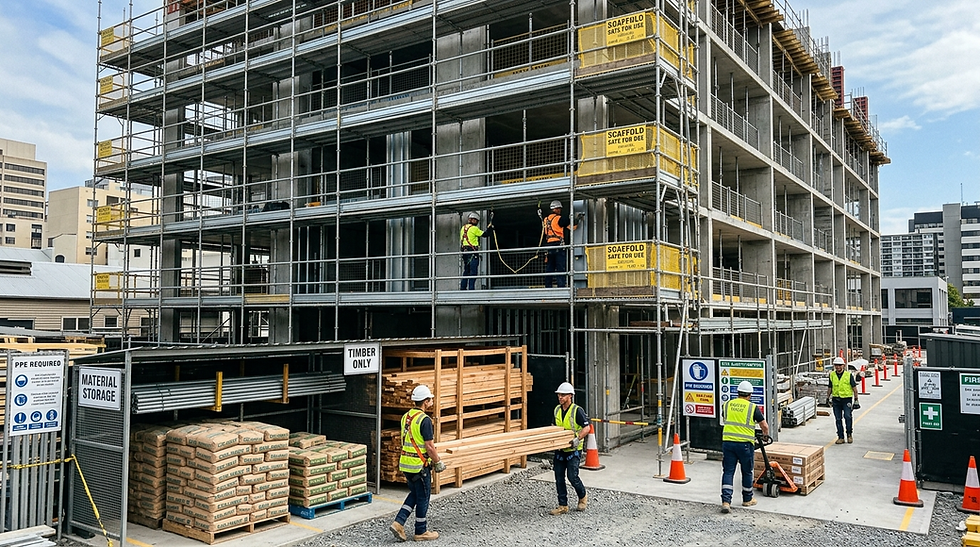
Scaffolding systems play a critical role in construction safety, but even strong structures can become dangerous when weight limits are ignored.
Understanding load capacity, preventing overloading, and working with experienced scaffolding professionals are essential for reducing accident risks.
In 2026, contractors are increasingly investing in better planning, modern safety technology, and professional scaffold systems to improve both worker safety and project efficiency.
FAQ
1. What happens if scaffolding is overloaded?
Overloading can cause structural failure, platform collapse, and serious accidents.
2. Who determines scaffold weight limits?
Manufacturers and engineers determine safe load capacities based on design and testing.
3. How often should scaffolding be inspected?
Scaffolding should be inspected before use and regularly throughout the project.
4. Can uneven weight distribution be dangerous?
Yes. Uneven loads can destabilize scaffolding and increase collapse risks.
5. Why hire professional scaffold specialists?
Experienced professionals understand load management, safe installation, and inspection requirements.
Looking for Reliable Scaffolding Services in Malaysia? 🛠️
Get professional scaffolding installation, rental, and project support today
At https://www.scaffolding.my/, we provide professional scaffolding rental, installation, dismantling, and safety-focused support services for residential, commercial, industrial, and construction projects across Malaysia.
💡 What you get: Better worker safety, smoother project progress, and reliable scaffolding systems designed for long-term performance.
👉 WhatsApp us now for fast quotation
👉 Book your scaffolding service today
👉 Get FREE consultation from our team
👉 Ask about installation and project support packages
Don’t risk dangerous scaffold overload accidents. Work with trusted professionals who prioritize safety, structural reliability, and proper project planning from the start 💯


Comments